Even with all these changes, the core purpose of SEO has not shifted. It is still about helping the right people find you at the exact moment they are searching for what you offer.
In this guide, you will see how the context around SEO has evolved, why it still matters for your business, and which fundamentals you still need to get right.
By the end, you will also have a clearer idea of how to navigate these changes without feeling overwhelmed.
What has changed in 2026 is the context around SEO

In 2026, SEO is no longer just about ranking a list of blue links. The way people search, the way results are displayed, and the way AI tools interpret your content have all changed. To stay visible and competitive, you need to understand the new context around search.
1. Users expect answers instantly
In 2026, people are even less patient than before. They are used to instant responses from search engines, AI assistants and social feeds. If your page takes too long to load, or your content makes them scroll and hunt for basic information, they will bounce and click on another result.
For SEO, this means two things:
- Your site needs to be technically fast and clean. Core Web Vitals, mobile responsiveness and page speed are no longer “nice to have”.
- Your content needs to serve the main answer quickly, then expand for those who want more depth.
Pages that bury the main point under fluff or slow design elements will struggle to keep users engaged, which in turn sends negative signals back to search systems.
2. AI assistants summarise content for them
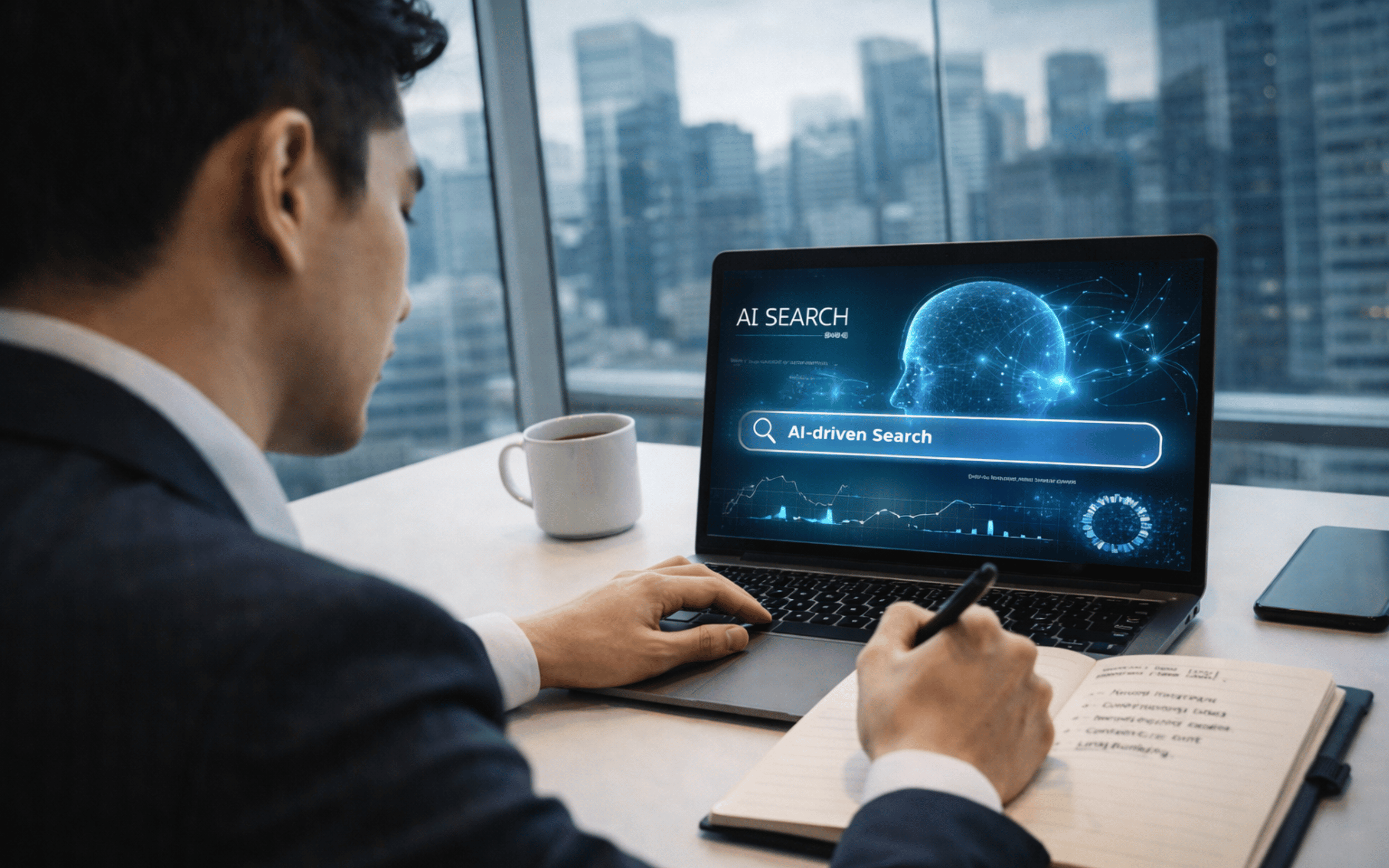
More users are asking questions through AI assistants and generative search, instead of manually clicking through multiple sites. These systems scan, interpret and summarise content into compact answers.
To stay visible in this environment, your content should be:
- Clear and structured, with headings that map to real questions people ask.
- Direct and factual, so AI tools can safely extract and reuse your explanations.
- Supported by genuine expertise, so you are seen as a reliable source to reference.
You are no longer just writing for humans and a crawler. You are also writing for systems that build AI summaries, which means your content must be easy to interpret and attribute.
3. Search results are richer, with videos, snippets and AI summaries
Traditional “ten blue links” are now only part of the search landscape. Results pages often include:
- Featured snippets
- “People also ask” question boxes
- Video carousels
- Image and local packs
- AI generated overviews or answer boxes
- Structuring content to win snippets and FAQs
- Using video on key pages so you can appear in video results
- Applying structured data where appropriate to clarify what is on the page
- Clear author or company information on key pages
- Case studies, testimonials and proof of results
- Consistent branding and messaging across your site and external profiles
- Thoughtful, original content that reflects real expertise, not just rephrased basics
- For your type of service
- For solutions to the problems you solve
- For comparisons between providers
- SEO for long term visibility
- Paid campaigns for short term pushes
- Content and social to build relationships and trust
- Makes your brand feel present and established
- Supports your positioning as an expert in your niche
- Reinforces your message whenever someone researches your category
- Be secure (HTTPS)
- Load quickly
- Work on all devices, especially mobile
- Have a clean, logical structure
- What your ideal customers are searching for
- Why they are searching for it
- Which stage of their journey they are in
- Informational pages for people learning about a topic
- Service or product pages for people comparing options
- Conversion pages for people ready to take action
- A clear main topic
- Descriptive headings and subheadings
- Internal links to related content
- Titles and meta descriptions that match the content and encourage clicks
- Real case studies
- Original insights
- Clear explanations based on your experience
- Content that actually helps someone move forward
- Your social profiles
- Mentions and links from other sites
- Business listings and directories
- How users respond when they see your brand
- Making sure your website is technically sound
- Creating or updating a few key pages around your main services
- Publishing honest, helpful content based on what you know best
This means you are competing for multiple types of visibility, not just a single organic listing. A modern SEO approach should therefore consider:
You are not optimising for one spot. You are maximising your chances to appear in the different surfaces search and AI now offer.
4. Brand trust and authority matter more than ever
With so much generic content online, search engines and users both look for signs that you are credible and experienced, not just well optimised.
Signals that support this include:
In practice, this means SEO is closely tied to branding and positioning. A strong, recognisable brand with a clear point of view is more likely to earn clicks, links and engagement, all of which support long term rankings.
Why SEO still matters

With AI, paid ads and social media, it is fair to ask if SEO is still worth the effort. The short answer is yes, as long as you treat it as a long term strategy, not a quick fix.
1. SEO brings in people who are already looking for you
Unlike interruption based marketing, SEO helps you connect with people who are actively searching:
This intent makes organic traffic especially valuable.
2. SEO supports sustainable growth
Paid ads stop the moment you stop paying. Good SEO can keep working for you for months or years, especially if your content is evergreen.
In 2026, many brands use a mix of:
SEO is one part of the engine, but a very important one.
3. SEO strengthens your brand
Appearing consistently in search results for relevant topics:
Done well, SEO is not just about clicks. It is about reputation and perceived authority.
SEO fundamentals you still need to get right

Even with all the changes, the basics still matter. You can think of them as the foundations. Without them, it is very difficult to benefit from more advanced tactics.
1. Technical SEO
Your website should:
Regular technical checks help you spot issues such as broken links, crawl errors and performance problems that quietly harm results.
2. Keyword and intent research
You still need to understand:
This is not about stuffing keywords. It is about matching pages to intent:
3. On page optimisation
Every important page should have:
These are simple steps, but they make a big difference to how your pages are understood and displayed.
4. Valuable, experience based content
In a world where AI can generate average content quickly, what stands out is:
Thin, generic pages are less likely to perform well in 2026. Search systems are getting better at rewarding content that shows expertise and genuine understanding.
5. A consistent, trustworthy brand presence
SEO does not live only on your website. Search engines look at the broader picture:
Consistent branding, messaging and quality across these touchpoints helps strengthen your overall search performance.
Conclusion
All of these developments can sound intimidating, especially if you are already busy running the business. The important thing to remember is that you do not have to tackle everything at once, and you do not have to do it alone.
You can start by:
From there, you can gradually refine and expand.
At Neu Entity, we help business owners navigate exactly these kinds of changes. We connect branding, content and SEO into a clear, practical plan so you can adapt to 2026 without losing focus.
If you want support making sense of SEO in this new context, we would be happy to guide you.
Ready to review your SEO for 2026? Talk to Neu Entity.
Let’s Talk!
If what you see here is relevant for you and can help you grow your business or organisation, we’d love to discuss further with you. Drop us a message or schedule an appointment with us.